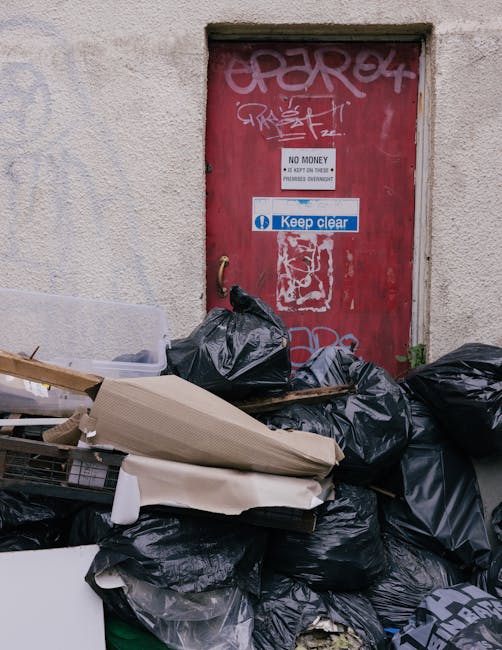
Thamesmead border bulky rubbish removal for Abbey Wood homes

If you live near the Thamesmead border and you are dealing with a sofa that will not fit down the stairs, a broken wardrobe that has outstayed its welcome, or a pile of old bits and pieces that has slowly taken over the hallway, you are not alone. Thamesmead border bulky rubbish removal for Abbey Wood homes is one of those jobs that looks simple right up until you try to do it yourself. Then the lifting starts, the van logistics start, and, frankly, the whole thing gets old very fast.
This guide explains how bulky item removal works, who it suits, what to watch out for, and how to choose a sensible route for homes around Abbey Wood and the Thamesmead edge. You will also find a practical checklist, a comparison of common methods, and a few real-world tips that make the process less stressful. Let's face it, most people do not need more rubbish around the house. They need it gone, safely and without drama.
Why Thamesmead border bulky rubbish removal for Abbey Wood homes matters
Bulky rubbish is different from everyday bin waste. It is bigger, heavier, awkward to carry, and often impossible to hide in a corner while you think about it later. In homes near Abbey Wood and the Thamesmead border, that matters even more because many properties have narrow paths, shared access, stairs, limited parking, or family schedules that do not leave room for a half-day clean-up mission.
There is also a practical side that people sometimes overlook. Bulky waste left too long can make a home feel cluttered, block useful storage, and create trip hazards. A single mattress leaning against a wall may not sound like much, but after a week or two it starts to feel like part of the furniture. Not in a good way.
Local removal is especially useful when you want a fast turnaround and a clear finish. Instead of waiting for the right council collection slot, borrowing a friend's van, or trying to disassemble everything yourself in the rain, you can deal with the whole pile in one go. That alone can be a relief.
For many residents, the real value is not just clearance. It is getting the room back. A spare bedroom can become a bedroom again. A hallway can stop being a storage lane. And a garage, which has probably been quietly collecting old appliances and garden odds and ends for years, can finally breathe again.
Practical takeaway: bulky rubbish removal is about restoring space, reducing stress, and avoiding the hidden effort that makes one simple job turn into a weekend of frustration.
How Thamesmead border bulky rubbish removal for Abbey Wood homes works
In simple terms, a bulky rubbish removal service collects large unwanted items from your home and takes them away for sorting, reuse, recycling, or disposal. The exact process may vary, but the basic flow is usually the same: identify the items, get a quote, agree a collection time, and have the waste removed from the property.
For Abbey Wood homes near the Thamesmead border, the access part is often the deciding factor. If there are tight stairwells, communal entrances, shared driveways, or a long walk from the kerb to the door, a good service will want to know that upfront. That is not nitpicking. It helps avoid delays and surprise charges later.
Some removals are straightforward. A sofa, a wardrobe, a broken bed frame, and a couple of drawers can usually be assessed quickly. Other jobs are more mixed: a bit of furniture, a fridge, some bagged junk, a radiator, and a pile from the loft that somehow multiplied when nobody was looking. For those, clarity matters more than anything.
Where relevant, larger clearances may be handled alongside broader home decluttering. If you are emptying several rooms, services such as home clearance, house clearance, or flat clearance can be more efficient than booking one item at a time. If the job is mostly old couches or tables, furniture disposal or furniture clearance may be the better fit.
A good service should also separate out special items properly. Fridges and appliances, for example, are not treated the same as standard rubbish, which is why fridge and appliance removal exists as its own service. Likewise, items like sofas and mattresses can have their own handling requirements, so it helps to ask rather than assume.
In practice, the job often comes down to three things: what the items are, where they are located, and how quickly you need them gone. Simple enough on paper. Slightly less simple when the items are at the top of the loft ladder.
Key benefits and practical advantages
The first benefit is obvious: you get the bulky items out of your home. But the real advantages go a bit further than that.
- Less physical strain: heavy lifting is awkward even before you factor in stairs, corners, and limited grip.
- Faster turnaround: one collection can clear a lot of space in a short time.
- Better use of home space: rooms, hallways, lofts, garages, and spare corners become usable again.
- More controlled disposal: items can be sorted for reuse, recycling, or specialist handling where needed.
- Less disruption: you do not need to arrange multiple trips to a disposal site.
There is also a quieter benefit that people often mention after the fact: mental relief. Clutter has a way of sitting in the background and nudging you every time you walk past it. Once it is gone, the house feels calmer. You notice the floor again. You notice the light in the room. It sounds a bit sentimental, maybe, but it is true.
If your clearance includes mixed waste, it can also help to think beyond "rubbish" and consider the full route for each item. Some things are best reused, some recycled, and some need specific disposal. That is why services such as recycling and sustainability are worth understanding before collection day.
For homeowners, landlords, and tenants alike, the biggest practical win is reducing the time spent managing the mess. Instead of juggling bags, lifting a sofa yourself, and trying to work out what counts as acceptable waste, the job gets handled in a more structured way. Simple. Efficient. Less chance of a sore back, too.
Who this is for and when it makes sense
This kind of service is useful for a lot of people, not just those doing a full house emptying. In fact, many requests are quite ordinary.
You may need Thamesmead border bulky rubbish removal if you are:
- replacing old furniture after a move or refurbishment
- clearing a spare room or guest room
- emptying a flat after tenants leave
- sorting out a garage or loft that has become a storage catch-all
- dealing with an unused mattress, sofa, or broken appliance
- tidying up after builders or decorators
- preparing a property for sale, letting, or family use
It also makes sense when the item is just too awkward to move yourself. A large wardrobe is not only heavy; it is bulky in all the worst ways. It catches on doors. It scrapes paint. It makes you question your life choices at about 8:15 on a Saturday morning.
For mixed household clearances, you might also look at garage clearance, loft clearance, or garden clearance depending on where the clutter has built up. If you are clearing a property after a big life change, it can be helpful to use a broader service such as house clearance or home clearance so everything is dealt with together.
If your situation is business-related rather than domestic, then a different route may be more suitable. For example, business waste removal or office clearance are better aligned to work premises and commercial needs.
Step-by-step guidance
Here is a practical way to approach bulky rubbish removal without overthinking it.
- List the items clearly. Write down what needs to go. Include big pieces, odd-shaped bits, and anything heavy.
- Separate standard items from specialist items. Mattresses, fridges, chemicals, and electrical items may need different handling.
- Check access. Note stairs, narrow corridors, gated entries, parking issues, or long carries from the property.
- Ask how the collection is priced. Is it based on volume, weight, item type, or access? Get clarity before booking.
- Prepare the area. Move small loose items out of the way so the team can work safely and quickly.
- Confirm what will and will not be taken. This avoids the awkward "we thought that was included" moment.
- Choose a collection time that suits the household. Early morning can be best if you want the rest of the day back.
- Keep pathways clear on the day. It sounds obvious, but chairs, prams, and bins always seem to appear at the wrong time.
If you are unsure whether an item can go, a quick reference point is useful. For skip-style disposal guidance, what can go in a skip offers a practical benchmark, even if you are not actually booking a skip. It helps frame what is generally acceptable and what may need a separate route.
A sensible next step is to compare removal options before you commit. That way you are not choosing under pressure. And pressure makes every quote feel more mysterious than it really is.
Expert tips for better results
Over time, a few habits make bulky rubbish removal smoother. Nothing flashy. Just the kind of small details that save time and annoyance.
- Take photos before you book. A quick set of pictures usually explains more than a long message.
- Measure awkward pieces. Especially if they need to come down stairs or through a narrow front door.
- Bundle similar items together. Furniture with furniture, appliances with appliances, and mixed waste in a separate pile.
- Flag any heavy lifting risks early. Broken glass, sharp metal edges, or unstable stacks should be mentioned up front.
- Ask about recycling first. It is often possible to divert usable or recyclable items away from general disposal.
- Keep one pathway open. The job always goes quicker if the route from room to vehicle is obvious.
One small but important tip: if you are clearing furniture, consider whether any pieces can be reused, repaired, or split into parts. Sometimes a table leg removed with a screwdriver saves a lot of wrestling later. Not glamorous, but effective.
It also helps to think in terms of the full room rather than isolated objects. For example, a worn-out sofa might lead naturally into a wider seating-area refresh, which is where mattress and sofa disposal can sit alongside a larger furniture clearance plan. That kind of joined-up thinking keeps the job tidy from the start.
And yes, a little preparation saves money more often than people expect. A neatly grouped pile is easier to assess than a room where everything is scattered like a post-Christmas jumble sale.
Common mistakes to avoid
Most problems with bulky rubbish removal are not dramatic. They are just inconvenient, which is almost worse because they are easy to avoid.
1. Underestimating access. A collection may look simple until someone notices the sofa has to pivot around a very tight corner. Always mention the real access conditions.
2. Mixing specialist waste with general rubbish. A fridge, a fluorescent fitting, or something potentially hazardous should not be treated like an old chair. If in doubt, ask first.
3. Leaving sorting until the day of collection. That is when everything slows down. A five-minute sort beforehand saves far more time later.
4. Assuming all furniture is the same. A small bedside cabinet and a three-seater sofa are not remotely the same job. Obvious, maybe, but people still get caught out.
5. Forgetting soft furnishings and bulky extras. People book for the obvious main items and then remember the old mattress, broken footstool, or spare shelf panels when the team is already there.
6. Choosing the cheapest option without checking what is included. Lowest price is not always best value if the service later charges extra for stairs, loading time, or item type.
To be fair, everyone misses one thing now and then. The trick is to catch the big stuff early so it does not become a collection-day headache.
Tools, resources and recommendations
You do not need a warehouse full of equipment to prepare for bulky rubbish removal. A few practical tools are enough.
- Measuring tape: useful for sofas, wardrobes, mattresses, and awkward corner turns.
- Phone camera: photos help explain the job clearly and quickly.
- Gloves: especially if items have sharp edges, dust, or rough surfaces.
- Heavy-duty bin bags or boxes: ideal for small loose bits that would otherwise slow down the clearance.
- Labels or marker pen: helpful if some items are staying and others are going.
For people who want a more structured service journey, these pages are useful places to understand the company's approach to pricing, safety, and support: pricing and quotes, insurance and safety, and health and safety policy. If you are arranging something sensitive or time-critical, it can also help to review terms and conditions and payment and security before booking.
If you are clearing paperwork, old personal files, or business documents during a home move, confidential shredding can be a useful add-on. It keeps sensitive material out of general waste streams, which is just good practice.
For waste-heavy projects that involve builders' debris, mixed rubble, timber, or renovation leftovers, the more relevant route may be builders waste clearance. And if the job sits somewhere between household and trade waste, the broader waste removal option is often the simplest starting point.
Law, compliance, standards, or best practice
Bulky rubbish removal is not just about convenience. There is a responsibility side too. In the UK, waste should be handled by a legitimate carrier and moved to appropriate facilities. You do not need to memorise legislation to act responsibly, but you should be cautious about who takes your waste and where it ends up.
Good practice usually includes:
- checking that the service is clear about what it removes
- making sure hazardous or specialist items are handled separately
- keeping records or receipts where relevant
- avoiding fly-tipping risks by using a proper, traceable service
- separating reusable or recyclable items where possible
For householders, the main thing is simple: do not leave waste with someone unless you are confident it will be handled properly. If something sounds vague, ask questions. If the answers stay vague, that is usually your answer.
Best practice also means being honest about the load. People sometimes round things down when describing what needs to go. A "couple of pieces" can become a van full if the loft is anything like most lofts. Clear information upfront keeps the process fair and realistic.
There is also a safety angle. Heavy lifting, broken items, damp waste, and old appliances can all create risks. Reputable operators should be mindful of safe handling, access, and insurance. That is why it is sensible to look at health and safety policy and insurance and safety when you are comparing options. It is boring in the best possible way.
Options, methods, or comparison table
There are a few ways Abbey Wood homeowners near the Thamesmead border can deal with bulky rubbish. The right choice depends on volume, access, urgency, and how much effort you want to spend yourself.
| Method | Best for | Pros | Limits |
|---|---|---|---|
| One-off bulky item removal | A few large items such as sofas, wardrobes, or mattresses | Quick, focused, minimal disruption | Can be less efficient for larger mixed clearances |
| Full home or house clearance | Multiple rooms, inherited contents, or major decluttering | Covers lots of items in one visit, simpler to manage | May be more than you need for a small job |
| Skip-style approach | DIY projects and mixed waste you can load yourself | Good for ongoing work, flexible while the skip is on site | You must do the loading yourself; access and permits may matter |
| Room-specific clearance | Lofts, garages, gardens, or flats with concentrated clutter | Efficient for targeted areas, easier to organise | Less suitable if waste is spread across the property |
If you want to understand what can and cannot go into a skip, the page on what can go in a skip is a useful reference point. Even if you end up choosing a removal service instead, it helps you think through item types sensibly.
Quick rule of thumb: if you can sort, carry, and load the waste yourself, a skip may work. If the main problem is the lifting, the stairs, or the sheer awkwardness of the items, a removal service is usually the calmer option.
Case study or real-world example
Imagine a typical Abbey Wood home near the Thamesmead border: a semi-detached property with a narrow front path, a small hallway, and a garage that has slowly become the family dumping ground. There is an old sofa, a broken chest of drawers, a fridge that no longer works, and a stack of garden bits from two seasons ago.
The household has been meaning to deal with it for months. Weekends fill up. Someone is always working, or tired, or not quite ready to start. Fair enough. Then a relative needs to stay over, and suddenly the spare room matters again. That is usually how it goes.
They list the items, take a few photos, and note the access issue: the sofa has to move through a tight hall and around a corner. The collection is booked with enough detail to avoid surprises. On the day, pathways are cleared, the fridge is unplugged in advance, and the smaller bits are boxed together.
The result is not just an empty garage. It is a functioning garage, a spare room that can actually be used, and one less source of low-level household stress. Nothing dramatic. Just a proper reset.
That kind of outcome is very common. The job is not glamorous, but the relief afterwards is real. You open the door the next morning and think, yes, that feels better already.
Practical checklist
Use this checklist before your bulky rubbish collection to keep things smooth.
- List every item that needs removing
- Separate standard items from specialist waste
- Measure large furniture and awkward pieces
- Check stairways, gates, and parking access
- Take clear photos of the load
- Ask what is included in the price
- Confirm whether lifting, loading, and disposal are covered
- Move small loose items out of the way
- Keep a clear route from the items to the exit
- Set aside anything you want to keep before the team arrives
- Ask about recycling or reuse options for suitable items
- Review payment and service terms before booking
Expert summary: the best bulky rubbish removal jobs are the ones planned just enough to avoid surprises, but not so much that they become another chore. Clear the access, clarify the load, and the rest usually falls into place.
Get a free quote today and see how much you can save.
Conclusion
Thamesmead border bulky rubbish removal for Abbey Wood homes is really about making a difficult task simple. When bulky items build up, they take more than space. They take attention, time, and energy. A sensible removal plan gives you all of that back.
The key is to be clear about the items, honest about access, and realistic about what kind of clearance you need. Sometimes a single item removal is enough. Sometimes the better answer is a full home or room-specific clearance. Either way, the goal is the same: less clutter, less strain, and a home that works better for the way you actually live.
If you are at the point where the pile is starting to annoy you every time you walk past it, that is usually a good sign to act. Not tomorrow. Not after one more weekend. Just get it moving. Small wins do add up, and a clearer home has a way of making everything else feel a bit more manageable.
And honestly, there are few better feelings than opening a door and seeing empty floor where a nuisance used to be.
Frequently Asked Questions
What counts as bulky rubbish in an Abbey Wood home?
Bulky rubbish usually means large or awkward items such as sofas, mattresses, wardrobes, tables, broken appliances, and mixed household clutter that will not fit in normal bins.
Is Thamesmead border bulky rubbish removal suitable for flats as well as houses?
Yes. It is often used for flats, maisonettes, and houses, though access details matter more in flats because stairs, lifts, and shared entrances can affect the collection plan.
Can I book removal for just one large item?
Yes, many people do. A single sofa, mattress, fridge, or wardrobe is a common reason to arrange removal, especially if lifting it yourself would be awkward or unsafe.
What if my items include furniture and general rubbish together?
That is usually manageable. Just describe the load clearly so the service can assess it properly. Mixed loads are common, especially after decorating or moving house.
Do I need to separate recyclable items before collection?
It helps if you can, but it is not always essential. The more clearly items are grouped, the easier it is to sort what can be reused or recycled.
How should I prepare my home before bulky rubbish is collected?
Clear the access route, move small items aside, set aside anything you want to keep, and note any stairs, narrow doors, or parking constraints in advance.
Are fridges and appliances treated differently from other bulky waste?
Often, yes. Fridges and appliances can require separate handling, which is why specialist services such as fridge and appliance removal are useful.
Is it better to use a skip or a removal service?
It depends on the job. A skip can suit DIY loads you can fill yourself. A removal service is usually better when the main challenge is moving large, heavy, or awkward items out of the home.
How do I avoid surprise charges?
Give accurate item details, explain access conditions, ask what is included, and confirm whether loading, stairs, or special items affect the price.
What should I do with old mattresses or sofas?
Use a proper collection route rather than leaving them outside. Specialist disposal is usually the cleaner and safer option, especially for large upholstered items.
Can bulky rubbish removal help during a house move or clearance?
Absolutely. It is especially useful before moving, after moving, or when you are clearing a property room by room and do not want the clutter following you around.
How do I know if a service is trustworthy?
Look for clear pricing, sensible questions about access and item type, transparent policies, and proper attention to safety and disposal. If the process feels vague, be cautious.
What is the best first step if I have no idea where to start?
Start by making a simple list and taking photos. That alone makes the job feel more manageable and gives you a clearer sense of whether you need item removal, room clearance, or a broader home clearance.